
If you are reading this, you are probably struggling in your relationship. You are about to understand how relationship projection psychology can help you.
Maybe it is not a huge disaster. Maybe your relationship just does not feel the way you thought it would. Maybe you and your partner keep having the exact same fight, over and over again, and you cannot seem to fix it. Maybe you feel misunderstood, or you are quietly wondering if you picked the wrong person.
When we hurt, we want to point a finger. It is human nature. We want to say, “You are making me feel this way. You are doing this wrong.”
But what if I told you that your relationship is not actually broken? What if all the pain, the fighting, and the triggers are exactly what you need right now?
This might sound crazy, but your partner’s annoying habits are not the real problem. The real problem is happening inside your own mind. To fix your love life, you need to understand relationship projection psychology.
For three years, I filmed my long-distance relationship journey on my YouTube channel, @m2mbeyondme. Thousands of people watched as Sasha and I fell in love across 400 miles. They watched us deal with the stress of living far away, the scary steps of committing to each other, and the beautiful mess of getting married and building our blended family right here in New Jersey.
People loved our story. But when I sat down and really looked at why our relationship survived, I realized a shocking truth.
None of the hard stuff was actually about her. It was all about me.
Every single time I felt triggered, scared, or disconnected, it was not because of her behavior. It was about what her behavior was showing me about myself. She was not the problem. She was the mirror.
This is the core idea of my new book, The Mirror Effect: You’re the Common Denominator.
In this easy-to-read guide, we are going to dive into the first chapter of this journey. We will look at 7 shocking truths about relationship projection psychology. We will explore exactly why do I keep attracting the same partner, and we will show you how to stop projecting insecurities in relationships.
1. You Are the Common Denominator
Let’s start with a hard truth. If you look back at all your past relationships, what do they have in common?
You might say, “They were all bad communicators,” or “They all took advantage of me.” But there is only one thing that was present in every single one of those relationships: You.
You are the common denominator.
This is the hardest part of relationship projection psychology to accept. When a relationship fails, our ego wants to blame the other person. The ego says, “If they would just listen to me, we would be happy.”
But if you keep finding yourself in the exact same arguments, feeling the exact same pain, year after year, with different people, the universe is trying to tell you something. It is showing you that the root of the problem lives inside of you.
Realizing that you are the common denominator is not a punishment. It is actually your greatest power. If you are the source of the pattern, you are also the only one who has the power to break it. You do not have to wait for your partner to change. You can change the whole relationship just by changing yourself.

2. What is Relationship Projection?
To fix the problem, we need to understand what it is. What exactly is relationship projection psychology?
Think of your mind like a movie projector. Inside your mind, you carry a lot of old film reels. These reels are made of your past hurts, your childhood fears, and your hidden insecurities.
When you get close to someone, you turn on the projector. You take your old fears, and you shine them onto your partner. This is what psychologists call projection. You see your own unresolved feelings, but you think they belong to the person standing in front of you.
For example, let’s say you secretly feel like you are not smart enough. If your partner gives you a simple tip on how to load the dishwasher, you might blow up and yell, “Why do you always treat me like I am stupid?”
Your partner was just talking about dishes. They were not calling you stupid. But because your projector was running, you projected your own insecurity onto them. You got mad at them for a feeling that you created.
This is the trap of relationship projection psychology. It tricks you into fighting a ghost.
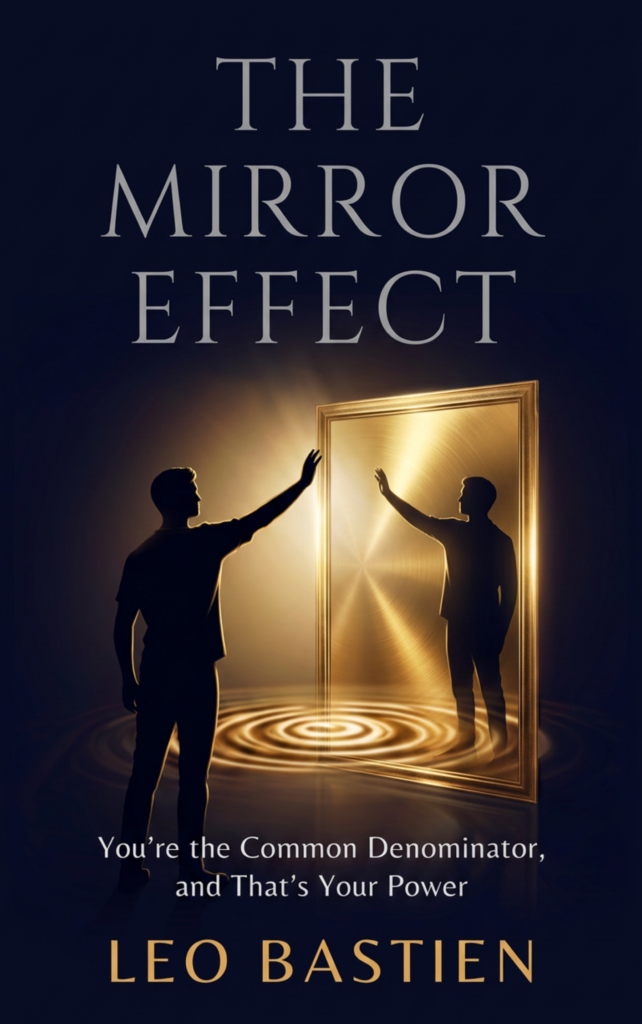
3. The Mirror Effect in Relationships
Once you understand that you are projecting your feelings, you will start to see the mirror effect in relationships.
The mirror effect means that whatever you strongly dislike in your partner is usually a reflection of something you refuse to accept about yourself.
If you get extremely angry because your partner is “too lazy” on the weekends, take a step back. Are you mad at them, or are you secretly mad that you never allow yourself to rest?
If you get furious because your partner is “too loud” or “takes up too much space,” ask yourself: were you taught as a child to stay quiet and make yourself small?
Your partner is simply acting out the parts of you that you have hidden away. They are a walking, talking mirror. If you hate the reflection, you cannot fix it by smashing the mirror. You can only fix the reflection by changing the source.
4. Why Do I Keep Attracting the Same Partner?
This is one of the most common questions people ask: “Why do I keep attracting the same partner?”
If you keep ending up with people who are emotionally distant, or people who are overly needy, it is not bad luck. It is bad programming.
You attract what you are ready to heal.
Your subconscious mind is very smart. It will keep picking the exact same type of person until you finally learn the lesson that type of person is trying to teach you.
If you do not know how to set healthy boundaries, you will keep attracting people who walk all over you. You will keep attracting them until you finally learn how to say “No.” Once you learn the lesson and heal that part of yourself, the pattern stops.
You stop attracting the same painful partner because you have outgrown the lesson. You upgraded your software.
5. Stop Playing the Blame Game
The blame game is the enemy of intimacy.
When Sasha and I were 400 miles apart, it was very easy to play the blame game. If I felt lonely, I could just blame the distance. I could say, “This is so hard because we live too far away.”
But when we finally closed the gap and moved into the same house, the loneliness did not magically vanish. Because the distance was never the real problem. The problem was how I was managing my own emotional state.
If you want to know how to stop projecting insecurities in relationships, you have to put down the pointing finger.
The next time you get mad at your partner, do not speak for 60 seconds. Close your eyes and ask yourself: “What is this actually about? Why does this hurt me so much? What is the mirror showing me right now?”
When you take responsibility for your own triggers, the fighting stops almost instantly. You realize there is nothing to fight about.
6. Healing is an Inside Job
A lot of couples go to therapy hoping the therapist will “fix” their partner. They want a referee to blow a whistle and tell their partner they are doing everything wrong.
But true transformation is an inside job.
You cannot use your relationship as a tool for your own transformation if you are only focused on what the other person is doing.
Every single trigger is an invitation to heal. When your partner pushes your buttons, do not attack them. Thank them. They are showing you exactly where you still need to grow. They are acting as a flashlight, shining a bright beam on the dark corners of your heart that you have been ignoring.
When you approach your love life with this mindset, everything becomes an opportunity for growth.
7. The Power of Absolute Ownership
This is the grand finale of relationship projection psychology. When you take absolute ownership of your feelings, you become untouchable.
If you realize that your partner cannot make you angry, you win. If you realize that your partner cannot make you feel worthless, you win. You are the boss of your own brain.
When you stop expecting your partner to act perfectly so that you can feel happy, you set them free. You let them just be a human being. And when they are free to just be human, the love flows so much easier.
You stop being their judge, and you start being their lover.
Your Next Steps on the Journey
This shift in thinking is not easy. It goes against everything we see in movies and read in fairytales. But it is the only way to build a real, lasting, unshakable partnership.
If this first chapter resonated with you, if you are tired of having the same fight, and if you are ready to finally step up and own your reflection, you are ready for the full system.
I wrote The Mirror Effect: You’re the Common Denominator to give you the exact blueprint.
This book is not about generic communication skills or learning your love languages. It is about fundamentally changing how you see your relationship—and in doing so, transforming the relationship itself.
In the book, we cover all 22 chapters of this journey. We teach you exactly how you and your partner co-create the dynamics you’re experiencing. We give you the specific practices that will transform your relationship by transforming you.
If you are ready to stop blaming the mirror and start changing your life, go grab your copy of the book today. And do not forget to subscribe to our YouTube channel, @theloversmindset, where we post brand new videos breaking down these exact psychology secrets every single week!
Frequently Asked Questions (FAQ)
What is relationship projection psychology?
Relationship projection psychology is the act of taking your own hidden fears, insecurities, or unresolved feelings and unconsciously placing them onto your partner. Instead of dealing with your own emotions, you convince yourself that your partner is the cause of your pain.
What is the mirror effect in relationships?
The mirror effect is the concept that your partner acts as a reflection of your own internal state. The traits or behaviors that bother you the most in your partner are often the exact things you refuse to acknowledge or heal within yourself.
Why do I keep attracting the same partner?
You keep attracting the same type of partner because your subconscious mind is trying to heal an unresolved wound. You will continue to attract people who trigger that wound until you finally learn the lesson, set healthy boundaries, and heal that part of yourself.
How to stop projecting insecurities in relationships?
To stop projecting, you must stop the blame game. When you feel triggered, take a 60-second pause before reacting. Ask yourself why you are truly upset, and take ownership of your own emotional response instead of blaming your partner for “making” you feel a certain way.