
When we fall in love, we desperately want a fresh start. We hope that finding the right person will magically erase all the heartbreak, disappointment, and pain we experienced in the past.
But anyone who has been in a serious partnership knows that love does not erase your history. In fact, a deep romantic connection usually does the exact opposite. It brings all of your buried history right to the surface.
If you find yourself constantly overreacting to small arguments, or feeling intense fear when your partner asks for space, you are not crazy. You are simply experiencing how a relationship triggers childhood trauma.
Most people run away when this happens. They think the relationship is toxic. But what if I told you that this discomfort is actually an incredible opportunity? What if healing your past through your relationship is the exact reason your soul chose this specific partner?
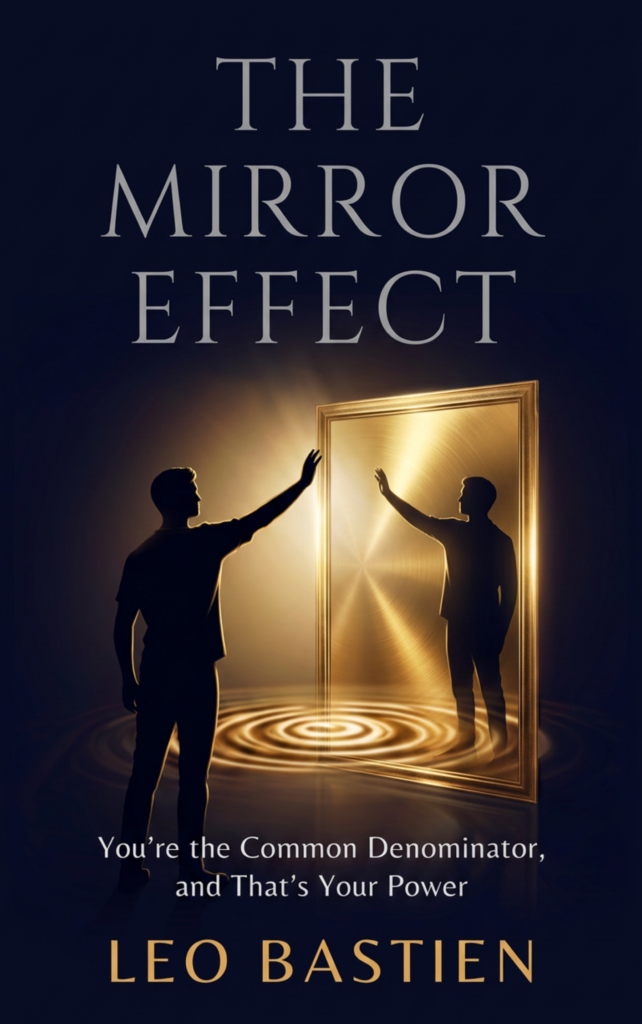
In Chapter 16 of my new book, The Mirror Effect: You’re the Common Denominator, we dive deep into the mechanics of Healing the Past Through Your Partner. Instead of letting old wounds destroy your love life, you can learn how to use your relationship as a healing tool.
If you are tired of repeating the same painful cycles, here are 5 powerful ways to start healing your past through your relationship today.

1. Recognize That the Trigger is a Time Machine
The very first step to healing your past through your relationship is recognizing what a trigger actually is.
A trigger is an emotional time machine. When your partner sighs heavily or forgets to text you back, and your chest suddenly fills with intense, overwhelming panic, you are no longer in the present moment. Your nervous system has just traveled back in time to the exact moment in your past when you felt rejected, abandoned, or unsafe.
You are not actually mad at your partner for forgetting to text. You are mad at the parent who never showed up for you.
When you realize this, you unlock the secret of how to stop projecting past trauma on partner. The next time you feel a massive emotional reaction to a tiny event, you must hit the pause button. Tell yourself, “My partner is just a mirror. They did not create this wound; they merely bumped into it.”
By separating your partner’s innocent action from your historical pain, you take the first massive step toward healing your past through your relationship.
2. Practice Healing Inner Child in Relationships
We all carry a younger version of ourselves inside our minds. If that younger version was hurt, ignored, or criticized, they are still crying out for attention today.
One of the most beautiful aspects of a committed partnership is the opportunity for healing inner child in relationships.
When your partner gets triggered and acts unreasonably angry or highly defensive, try to stop looking at them as an aggressive adult. Instead, try to see the scared 7-year-old child underneath their armor. When you change your perspective, your anger will naturally melt into deep compassion.
You can actively participate in healing your past through your relationship by giving your partner the exact type of unconditional love and patience that they never received as a kid. When you hold a safe space for their inner child to throw a tantrum without judging them or leaving them, their nervous system finally learns that it is safe to relax.

3. Burn the Old Scripts
Your past programmed you with a specific set of rules about love.
- “If I speak up, I will be punished.”
- “If I get too close, they will leave me.”
- “Love means sacrificing my own happiness.”
If you want to master healing your past through your relationship, you have to identify these old scripts and throw them in the fire.
The beauty of a conscious partnership is that it provides a safe laboratory to test new behaviors. If you were taught that speaking your mind leads to rejection, your relationship is the perfect place to test a new script. You can use your relationship as a healing tool by bravely speaking your truth to your partner, and then watching as they do not reject you.
Every time your partner responds with love instead of the punishment you expected, a piece of your past trauma is permanently overwritten. Understanding how attachment styles carry over from childhood is crucial here, as it helps you pinpoint exactly which scripts need to be rewritten.
4. Take Absolute Ownership of Your Wounds
You cannot successfully focus on healing your past through your relationship if you expect your partner to do all the heavy lifting.
Your partner is not your therapist, and they are not your savior. They are your mirror.
If you want to know how to stop projecting past trauma on your partner, you must take absolute, radical ownership of your own triggers. When a relationship triggers childhood trauma, it is your responsibility to say, “I am feeling incredibly anxious right now. You didn’t do anything wrong, but my abandonment wound is flared up. I just need a minute to regulate myself.”
When you own your trauma, you remove the burden from your partner’s shoulders. They no longer have to walk on eggshells to avoid upsetting you. This creates massive emotional safety, which is the exact environment required for true healing your past through your relationship.
5. Embrace the Dark Nights of the Soul
Healing your past through your relationship is not always a peaceful, beautiful process. Sometimes, it is incredibly messy.
There will be nights where you both feel completely exhausted. There will be arguments that bring up your deepest, darkest fears. In my book, we call these the “Parts of You That Scare You” (Chapter 19).
Do not run away from the mess. The friction is where the growth happens. You are breaking cycles that have existed in your family line for generations. That kind of heavy lifting is supposed to be hard!
If you are committed to healing your past through your relationship, you must learn to sit in the discomfort. You must hold your partner’s hand in the dark and trust that the sun will eventually rise.
The Mirror is Waiting
You do not have to carry the heavy bags of your past forever. You can put them down.
If you are tired of fighting the same ghosts, and you are finally ready to use your love as a bridge to a better future, you need a proven system.
I wrote The Mirror Effect: You’re the Common Denominator to give you the exact framework you need. In Chapter 16, we break down the step-by-step mechanics of healing your past through your relationship, so you can stop bleeding on the people who didn’t cut you.
Are you ready to transform your triggers into your greatest strengths?
Grab your copy of The Mirror Effect today, and be sure to subscribe to our YouTube channel, @m2mbeyondme, where we share brand new strategies for conscious relationship building every single week. Your past does not have to dictate your future. Start healing today.
Frequently Asked Questions (FAQ)
What does it mean to be healing your past through your relationship?
Healing your past through your relationship means using the emotional triggers that arise with your partner as a map to your unresolved childhood wounds. Instead of blaming your partner for your pain, you use the safety of the relationship to rewrite old, toxic beliefs about love.
Why is it that a relationship triggers childhood trauma?
A romantic relationship triggers childhood trauma because emotional intimacy requires extreme vulnerability. When your nervous system senses that you are vulnerable, it automatically brings up past memories of when vulnerability led to pain, rejection, or abandonment, in a misguided attempt to protect you.
How to stop projecting past trauma on partner?
To stop projecting, you must recognize that your intense emotional reactions are usually out of proportion to the present event. You must take a “60-second pause” when triggered, separate your partner’s innocent actions from your historical wounds, and take personal responsibility for regulating your own emotions.
What is the best way of healing inner child in relationships?
The best way of healing the inner child in relationships is through deep empathy. When your partner is acting defensive or unreasonably upset, try to view them as a frightened child rather than an aggressive adult. Offering them unconditional patience in those moments helps their nervous system learn that they are finally safe.