
If you’re searching for how to fix a relationship, I want to start by telling you something that most relationship advice will never say:
There are two completely different problems that look like the same problem. And until you know which one you’re actually trying to solve, no communication technique, love language quiz, or couples retreat will give you what you’re looking for.
The first problem is emotional disconnection. You love each other, but you’re drifting. Life logistics have replaced real conversation. You’re in the same house but in different emotional worlds. You feel like roommates.
The second problem is pattern repetition. You keep having the same conflict. You’ve tried everything. Nothing sticks. It feels like something deeper is running the show — something you can’t quite name or reach.
Most couples are dealing with both problems simultaneously. And most relationship advice addresses neither one at the root level.
This guide covers both. Completely. From fifteen years of lived experience in long-distance relationships, marriage, and a blended family — not from a textbook.

Part 1: Understanding Why Your Relationship Feels Broken
How Do You Know If You Need to Fix a Relationship?
The first sign your relationship needs attention isn’t a dramatic fight. It’s a quiet absence.
You stop reaching for each other’s hand. Conversations get shorter. Inside jokes fade. You start having the same argument, and you both know, somewhere in the middle of it, that this isn’t really what it’s about — but you can’t find what it actually is about either.
You love them. You’re not sure if that’s enough anymore.
These are the signs that you need to fix relationship problems, not abandon the relationship entirely. They’re signs of disconnection, not incompatibility. And disconnection — unlike incompatibility — is fixable.
The Two Layers of Every Relationship Problem
After years of navigating my own relationship through long-distance, blended family complexity, and the quiet drift that comes from building a life together, I identified something that changed everything: Every relationship problem exists on two layers.
- Layer 1: The surface layer. This is the disconnection you can see. You’ve stopped being emotionally present with each other. Life has taken over. You’re functioning together but not feeling together.
- Layer 2: The pattern layer. This is the disconnection you can’t see. Your past wounds, unhealed beliefs, and unresolved emotional patterns are running your relationship — without your permission. You’re not just arguing with your partner. You’re arguing with everyone who ever shaped how you experience love.
Most relationship advice only addresses Layer 1. That’s why it doesn’t work long-term. To truly understand how to fix a relationship, you have to work both layers. And that’s exactly what this guide does.
Part 2: How to Fix a Relationship at the Surface Level (Emotional Reconnection)
What Emotional Reconnection Actually Means
Emotional reconnection is not having a big, cathartic conversation. It’s not a weekend away. It’s not couples therapy (though therapy can help).
Emotional reconnection is the consistent, daily practice of choosing your partner over the noise of your life. It’s building rituals that keep you emotionally current with each other — so the distance never gets a chance to become a wall.
Here’s what I’ve found after years of research and practice: couples don’t drift apart because they stop loving each other. They drift apart because they stop showing up for each other in small, consistent ways. The fix isn’t one massive gesture. It’s a thousand small ones, done with intention.
The 5-Minute Morning Ritual That Changes Everything
One of the most powerful tools I teach in The Midnight Bridge is the 5-Minute Morning Ritual — a daily practice that takes less time than checking your phone but creates more connection than most couples feel in a week.
Here’s the concept: Before the day takes over — before the notifications, the kids, the commute, the deadlines — you spend five minutes being fully present with your partner. Not talking about logistics. Not planning the week. Not reviewing the argument from last night. Just present. Together.
This ritual works because of what psychologists call the “morning vacuum” — the first few minutes after waking up, before your defensive ego fully activates, you’re more emotionally accessible than at any other point in the day.
Practical implementation:
- Wake up 5-10 minutes earlier than you currently do.
- Before touching your phone, turn toward your partner.
- Make eye contact. Ask one real question — not “what are your plans today?” but something that invites a genuine response: “How are you actually feeling this morning?” or “Is there anything on your mind that we haven’t talked about?”
- Listen. Don’t fix. Don’t advise. Just receive.
- Share something honest in return.
That’s it. Five minutes. Done before the day can steal it.
The Safe-Sharing Protocol
One of the biggest reasons couples stop having real conversations is that they’ve been burned before. You shared something vulnerable, and it became ammunition in a later argument. You opened up, and your partner got defensive. You tried to have an honest conversation, and it turned into a fight.
So you stopped being honest. You started editing yourself. And the emotional distance grew.
The Safe-Sharing Protocol — also developed in detail in The Midnight Bridge — is a communication framework designed specifically to make vulnerability safe between partners.
The three core principles:
- Share the feeling, not the accusation. Instead of: “You never listen to me.” Try: “I’ve been feeling like I’m not being heard lately, and I want to understand if that’s something we can work on together.” The first creates defensiveness. The second creates an opening.
- Receive before you respond. When your partner shares something vulnerable, your first response should never be a counter-argument. It should be a reflection: “So what I’m hearing is…” This proves they’ve been heard before you offer your perspective.
- Separate the moment from the pattern. “You did X” is about a moment. “You always do X” is about a pattern. Keep vulnerable conversations focused on specific moments. Patterns belong in a separate, calmer conversation — not in the middle of an emotional disclosure.
How to Reconnect With Your Partner When Everything Feels Too Far Gone
Many couples reach out to me convinced that their relationship is too far gone to fix. The distance has been building for years. They’ve tried talking, and it always ends in the same place.
Here’s what I tell them: the distance didn’t build in a day, and it won’t close in one conversation. But it can close — if you’re willing to start somewhere small.
The reconnection process has four stages:
- Stage 1: Stop the bleeding. Identify and eliminate behaviors that are actively creating more distance (stonewalling, contempt, defensiveness, and criticism). These are primary drivers of emotional distance. See Psychology Today’s research on communication patterns in couples for more on this dynamic.
- Stage 2: Create safety. Before emotional reconnection can happen, both partners need to feel emotionally safe. Safety means: what I share with you will not be used against me.
- Stage 3: Build new rituals. Small, consistent rituals of connection (like the morning ritual) rebuild the emotional infrastructure of a relationship more effectively than any single breakthrough conversation.
- Stage 4: Go deeper. Once safety is established, you can start having the conversations you’ve been avoiding. What are your unspoken expectations? What do you need that you’ve been too afraid to ask for?
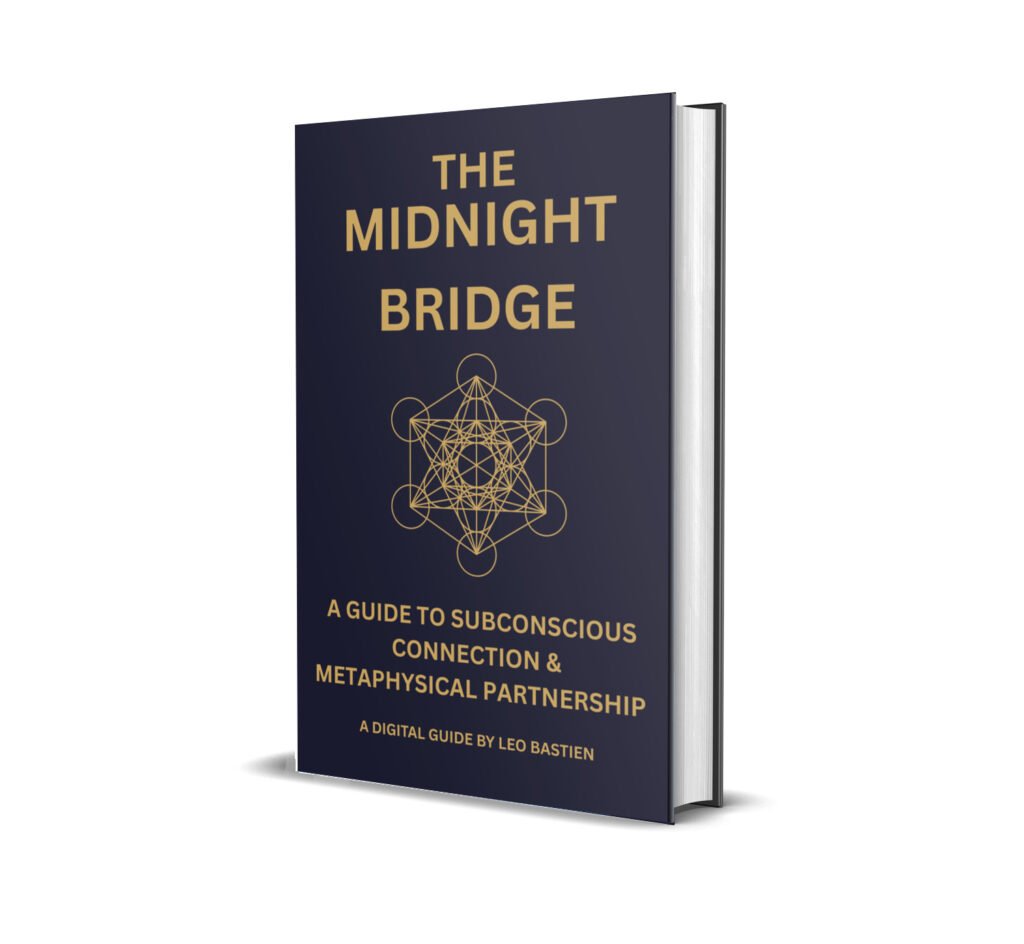
Get the complete emotional reconnection system in
Includes the 5-Minute Morning Ritual, Safe-Sharing Protocol, and the 3-Step Dream Decoding Framework.
Get The Midnight Bridge ($14.99)Get the complete emotional reconnection system in The Midnight Bridge ($14.99). Includes the 5-Minute Morning Ritual, Safe-Sharing Protocol, and the 3-Step Dream Decoding Framework.
Part 3: How to Fix a Relationship at the Pattern Level (Inner Transformation)
Why Emotional Reconnection Alone Isn’t Enough
Here’s a hard truth: you can do everything in Part 2 — the morning ritual, the safe sharing, the consistent effort — and still find yourself back in the same conflict six months later.
Not because the tools don’t work. But because there’s a deeper layer running underneath your relationship that you haven’t addressed yet. You are the common denominator in every relationship you’ve ever been in.
I know that’s uncomfortable to hear. But it’s also the most empowering thing anyone can tell you. Because if you’re the common denominator, then you’re also the point of leverage. Change yourself, and you change the dynamic. This is the core principle of The Mirror Effect: your relationship isn’t just a partnership between two people. It’s a mirror that reflects your inner world back to you.
How to Fix a Relationship by Understanding the Mirror Effect
Here’s how the mirror works: What triggers you in your partner is often something in yourself. Not always. But far more often than we’re comfortable admitting.
- When you find yourself furious at your partner for being emotionally unavailable — ask yourself: Where in your life are you emotionally unavailable?
- When you judge your partner for being too needy — ask yourself: Where do you need validation that you’re afraid to admit?
- When you feel unseen by your partner — ask yourself: How clearly are you letting yourself be seen?
This isn’t blame. This isn’t saying that your partner’s behavior is acceptable because it reflects you. It’s saying that the charge you feel around their behavior is information about you — information you can actually do something with.
Because you cannot change your partner. But you can absolutely experience true relationship transformation by changing yourself. And when you change yourself — your nervous system, your beliefs, your patterns — the relationship changes because you’re no longer bringing the same frequency to it.
Why You Keep Attracting the Same Type
Before you can fix your current relationship at the pattern level, it helps to understand why you ended up in the dynamic you’re in. You didn’t choose your partner randomly. Your nervous system selected them specifically because they activate relationship patterns that your system has been trying to resolve since long before you met.
Think of every recurring conflict you have with your partner. The specific type of pain it causes. The specific way it makes you feel about yourself. Now think back: Where did you first feel that way?
Almost always, you’ll find an earlier chapter. A parent who was critical, making you hypersensitive to criticism from your partner. An absent caregiver, causing your partner’s need for space to trigger your abandonment wound. You didn’t attract your partner by accident. Your nervous system brought them into your life because they carry the exact frequency of your unfinished business.
This doesn’t make them wrong for you. It makes them your greatest teacher.
How to Stop Repeating the Same Patterns
Stopping the pattern requires three things:
- Name the pattern. Write down your most recurring relationship conflict. Not the surface version (“we fight about money”) but the emotional version (“I feel controlled and unappreciated, and I shut down”).
- Trace the pattern to its origin. Ask: “Where did I first feel this way?” The answer is almost always somewhere in your early life. This isn’t about blame. It’s about understanding.
- Separate the present from the past. The next time the pattern activates, practice pausing before you react. Ask: “Is this actually about my partner? Or is this about something older?” This 60-second pause creates enough space to choose a different response.
You Are Choosing How You Feel (And That’s Your Power)
One of the most transformative principles in The Mirror Effect is the concept that your emotional state is not something that happens to you. It’s something you participate in creating. Your partner cannot make you angry. Your circumstances cannot make you sad.
They can trigger these states. But whether you stay in them — and for how long — is your choice. Change the story, and you change the feeling.
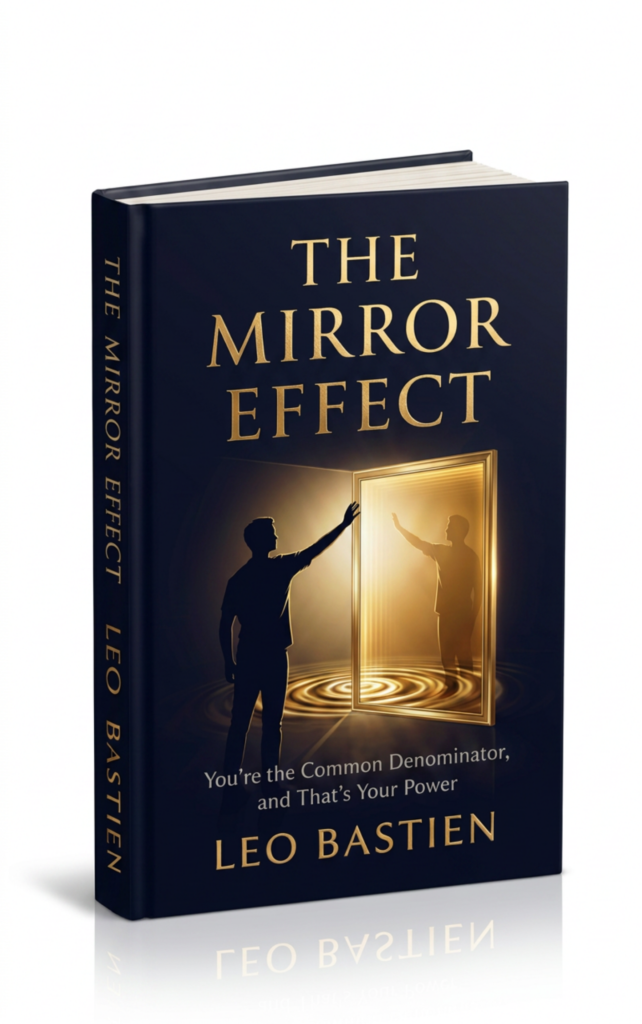
Master The Mirror Effect
Get the complete transformation system in The Mirror Effect. Learn the 22 principles for breaking negative cycles and transforming your relationship by transforming yourself.
Get The Mirror Effect ($14.99)Part 4: The Complete System (Using Both Books Together)
How The Midnight Bridge and The Mirror Effect Work Together
After years of developing both frameworks, I realized something: they’re not two separate approaches. They’re two phases of the same journey.
- Phase 1 — The Midnight Bridge: Create the external conditions for reconnection. Build daily rituals of presence. Establish emotional safety. Rebuild the emotional infrastructure of your relationship.
- Phase 2 — The Mirror Effect: Do the internal work that makes the reconnection sustainable. Identify and heal the patterns that keep recreating the same conflicts. Take radical ownership of your emotional experience.
Most couples who try to skip Phase 1 and go straight to Phase 2 find themselves doing profound inner work in total isolation. Couples who only do Phase 1 find themselves reconnecting beautifully — until the same old trigger fires.
You need both. Phase 1 gives you the safety to do Phase 2 together. Phase 2 gives Phase 1 something to build on that actually lasts.
Which Book Should You Start With?
Start with The Midnight Bridge if:
- You and your partner feel emotionally distant right now.
- Daily life has taken over your connection.
- You want to rebuild the feeling of being partners, not roommates.
Start with The Mirror Effect if:
- You keep having the same conflict no matter what you try.
- You suspect the pattern is deeper than communication skills.
- You’re ready to look honestly at your own contribution to the dynamic.
Part 5: When to Seek Professional Help
This guide covers a lot of ground. But I want to be honest with you about something: There are situations where self-guided work isn’t enough, and where professional support is not just helpful but necessary.
Seek professional help if:
- There is any form of abuse (emotional, physical, financial) in your relationship.
- One or both partners is dealing with untreated mental health conditions.
- Substance use is a factor in your relationship dynamics.
- You’ve been working on these patterns for years with no movement.
A qualified couples therapist isn’t a sign of failure. It’s a sign that you take your relationship seriously enough to get the best possible support.
Part 6: 7 Things You Can Do Today to Start Fixing Your Relationship
You’ve read a lot in this guide. Here are the seven most immediate actions you can take today:
- Have the conversation you’ve been avoiding. Not aggressively. Not accusatory. But honestly and openly.
- Start the 5-Minute Morning Ritual tomorrow. Before your phone. Before the day.
- Identify your most recurring pattern. Write down the emotional version, not the surface version.
- Ask yourself where that pattern started. Not to blame anyone. Just to understand.
- Notice the next trigger — and pause. Before you react, ask: “Is this about them, or is this about something older?”
- Stop trying to change your partner. For one week, redirect every impulse to fix your partner toward understanding yourself instead.
- Read one of the books. Everything in this guide is just the introduction. The actual work begins when you go deeper.
Frequently Asked Questions (FAQ)
Can you fix a relationship on your own, without your partner’s participation?
You can do more than you think. When you change your frequency — your emotional responses, your patterns, your presence — the relationship dynamic shifts, even if your partner hasn’t read a single word of any book. That said, the deepest transformation happens when both partners are engaged. If your partner isn’t ready, start with your own work. Often, when one person shifts significantly, the other follows.
How long does it take to fix a relationship?
Some couples feel a meaningful shift within days of implementing the tools in The Midnight Bridge. Deeper pattern work — the kind covered in The Mirror Effect — typically takes 30-90 days of consistent practice to produce lasting change. The honest answer is: it depends on how deep the patterns run and how consistently you practice. But every single day of genuine effort moves you forward.
What if my partner refuses to engage?
Start without them. Do the morning ritual on your own as a meditation or journaling practice. Do the mirror work on yourself. When your partner sees genuine, sustained change in you — not performed change, but real internal shifts — they often become curious. And curiosity is the beginning of participation.
Is it possible to fix a relationship after infidelity?
Yes, though it requires a level of honesty, accountability, and patience that goes beyond what’s covered in this guide. The principles in both books — emotional reconnection and inner transformation — are directly applicable. But infidelity recovery specifically benefits from professional support alongside self-guided work.
How do I know if a relationship is worth fixing?
If you’re asking this question, the relationship probably has value to you — otherwise you’d have already left. The question worth asking isn’t “is it worth it” but “are we both willing?” A relationship where both partners are willing to do the work is fixable. A relationship where only one person is willing is exhausting. Know the difference.
What’s the difference between The Midnight Bridge and The Mirror Effect?
The Midnight Bridge focuses on rebuilding emotional connection between you and your partner through daily rituals and communication practices. The Mirror Effect focuses on understanding and transforming the internal patterns you bring to your relationship. Together they form the complete system — external reconnection and internal transformation.
Conclusion: How to Fix a Relationship (The Real Answer)
The real answer to how to fix a relationship isn’t a technique. It’s a commitment.
A commitment to stop looking for the problem in your partner and start looking for it in yourself. A commitment to show up consistently — in the small, daily moments — instead of waiting for the big dramatic gesture. A commitment to feel your own feelings instead of projecting them.
This is the work. It’s simple, but it’s not easy. And it never fully ends.
But the couples who do this work — who commit to both the external reconnection and the internal transformation — don’t just fix their relationship. They build something new. Something that couldn’t have existed before they were both willing to change.
That’s what’s available to you.
→ Start the journey with The Midnight Bridge → Or begin the inner work with The Mirror Effect