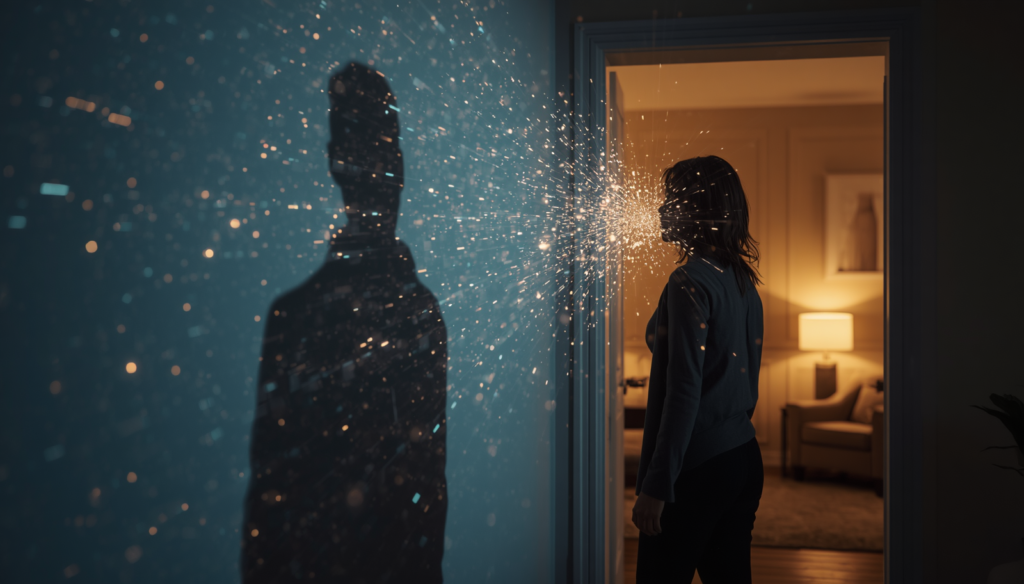
Humans are fundamentally hard-wired for connection. For millions of years, our survival relied entirely on remaining closely tethered to our tribe. Being separated meant certain danger. While our modern world is much safer, our nervous systems have not completely evolved past this primal terror. Today, this survival instinct often manifests as a deep, suffocating fear of being alone in a relationship. This fear is the silent architect behind some of the most destructive behaviors in a marriage, turning a partnership of love into a prison of anxiety.
When you are driven by the fear of losing your partner, you project a frequency of desperation. Ironically, it is this exact desperate energy that ultimately pushes them away.
Quick Answer (Key Takeaways):
- The Metaphysical Trap: The fear of being alone in a relationship creates a low-vibrational energetic field. You stop acting out of love and start acting out of a desperate need to control the connection.
- The Symptoms: This fear causes you to ignore your own boundaries, suppress your authentic voice, and hyper-analyze every single text or look your partner gives you.
- The Solitude Solution: Overcoming this anxiety requires learning the profound metaphysical difference between toxic isolation and healthy, shared solitude.
- The Goal: By utilizing subconscious dream decoding and nervous system regulation, you can shift your frequency from anxious dependency to secure, independent love.
The Metaphysics of the Fear Of Being Alone In A Relationship
When you share your life with someone, your individual energetic fields intertwine. You become accustomed to their physical presence, their voice, and their daily logistical routines. When a gap opens up in the communication—perhaps due to a stressful work week or an unresolved argument—your nervous system registers the sudden distance.
If you have a secure attachment, you view this distance as a temporary “drift.” You know the bridge is still there. However, if you are battling the fear of being alone in a relationship, your amygdala perceives this temporary drift as a catastrophic, life-threatening abandonment.
Your ego goes into hyperdrive to protect you. It tells you that if your partner leaves, you will not survive the emotional devastation. According to clinical studies on adult attachment theory and relationship anxiety, this specific fear often traps people in unfulfilling, disconnected, or even toxic dynamics. People will tolerate profound emotional starvation simply because their nervous system decides that bad company is safer than the terrifying void of solitude.
Metaphysically, carrying this fear creates a massive blockage in your shared home. It produces a dense, heavy, anxious frequency. Your partner can subconsciously feel this energy. They feel the pressure of your constant monitoring and your desperate need for validation. This pressure often causes them to emotionally withdraw to protect their own energetic boundaries, which, tragically, only proves your fear right.
7 Shocking Truths About This Relationship Anxiety
If you want to heal the energetic architecture of your marriage, you must first recognize how this primal fear is hijacking your daily behavior. Here are seven shocking truths about how the fear of being alone in a relationship destroys intimacy from the inside out.
1. You Silence Your Own Authentic Voice
When you are terrified that your partner will abandon you, your primary goal becomes keeping the peace at all costs. You stop expressing your true opinions, desires, and frustrations. If you want a quiet evening reading but your partner wants to go out, you force yourself to go out just to avoid a potential conflict. Suppressing your authentic frequency to appease someone else is the fastest way to kill the metaphysical spark in a marriage.
2. You Suffer from Hyper-Vigilance
The fear of being alone in a relationship turns you into an emotional detective. You constantly scan your partner’s face for signs of displeasure. You analyze the tone of their text messages, the way they sigh, and how quickly they respond to your bids for connection. This hyper-vigilance keeps your cortisol (stress hormone) constantly elevated, ensuring you are perpetually exhausted and emotionally reactive.
3. It Creates the “Pursuer-Distancer” Dynamic
In relationship psychology, the anxious partner usually becomes the “pursuer.” When you feel distance, you immediately try to close the gap by asking a barrage of questions, demanding attention, or starting a fight just to get a reaction. Your partner, overwhelmed by this aggressive frequency, becomes the “distancer” and pulls away. This agonizing loop is fueled entirely by the untreated fear of being alone in a relationship.
4. You Confuse Enmeshment with Intimacy
True intimacy is two whole, secure individuals choosing to share an energetic space. Enmeshment is when two people blur their boundaries so completely that they cannot function independently. If you feel panic when your partner goes out with their friends or pursues an independent hobby, you are suffering from enmeshment. You mistakenly believe that total fusion is the only way to prevent abandonment.
5. You Subconsciously Prepare for the Worst (Dream Data)
Your waking mind will try to rationalize your anxiety, but your subconscious mind cannot lie. The fear of being alone in a relationship frequently manifests in vivid, exhausting nightmares.
- Dream of Losing a Partner? 7 Urgent Subconscious Signals. You may dream of trying to call your partner on a broken phone, watching them walk onto a train without you, or screaming for help in an empty house. These dreams are your brain’s attempt to process the chronic, heavy static of your waking anxiety.
6. You Settle for Emotional Crumbs
When the terror of solitude is your driving force, your standards for how you should be treated plummet. You begin to accept a relationship that looks like a glorified roommate situation. You accept the lack of physical touch, the lack of deep conversation, and the constant logistical bickering because your ego tells you, “At least someone is physically in the house with me.”
7. You Numb the Pain Through External Voids
If the distance in your partnership becomes too painful to look at, the fear of being alone in a relationship will push you to numb the anxiety. You might dive obsessively into social media, creating a false illusion of connection with strangers. You might overwork, staying at the office late to avoid the silent house. These are avoidance tactics designed to keep you from facing the void.

5 Metaphysical Steps to Overcome the Fear
You cannot think your way out of a nervous system response. If you want to stop pushing your partner away and start building a secure, grounded connection, you must take structural action. Here is the exact five-step metaphysical framework to heal the fear of being alone in a relationship and realign your shared frequency.
Step 1: Claim and Master “Shared Solitude”
The ultimate cure for the terror of being alone is intentionally choosing to be alone. You must learn that solitude is not a punishment; it is a sacred space for frequency alignment.
Start practicing “shared solitude” within your home. This means sitting in the same room as your partner—perhaps you are enjoying a pescatarian dinner or drinking a cup of coffee—while they are doing something entirely independent. Do not speak. Do not ask for reassurance. Simply exist in your own energetic field while physically near them. When your nervous system realizes that silence does not equal abandonment, the fear of being alone in a relationship begins to dissolve.
Step 2: Utilize the Safe-Sharing Dream Protocol
Because your waking ego is terrified of rejection, you must use your subconscious data to communicate. When you wake up from an anxious dream, do not use it to accuse your partner.
Share the emotion over morning coffee. Say, “I had a terrifying dream last night that I was wandering around a city and couldn’t find you. I woke up realizing I have a lot of internal fear about losing our connection.” By taking ownership of the fear and sharing the subconscious metaphor, you bypass their defensive ego. You invite them to comfort you rather than fight you.
Step 3: Dismantle the “Inner Critic” Narratives
When your partner is quiet, your Inner Critic will immediately whisper, “They are planning to leave you.” You must forcefully interrupt this thought pattern.
The fear of being alone in a relationship relies on you believing these false narratives without demanding evidence. When the anxiety spikes, look for objective evidence of their love. Did they handle a difficult logistical task for the household today? Did they make sure the doors were locked? These small acts of service are energetic proof of their commitment. Focus on the facts, not the fear.
Step 4: Implement the 10-10-10 Alignment Ritual
Anxious attachment thrives in unpredictability. To soothe your nervous system, you must create a predictable, structured rhythm of connection that you can rely on.
Implement the 10-10-10 daily check-in. Spend 10 minutes in the morning aligning your schedules. Spend 10 seconds midday sending a low-pressure text (with no expectation of an immediate reply). Spend 10 minutes in the evening doing an emotional debrief. When your brain knows exactly when the next moment of connection will happen, the chaotic fear of being alone in a relationship loses its grip.
Step 5: Shift from “Need” to “Choice”
This is the ultimate metaphysical shift. Right now, your frequency is vibrating at the level of need. You need your partner to stay so that you do not fall apart. This places a crushing, unfair burden on their energetic field.
You must transition your mindset from need to choice. Say to yourself: “I am a whole, complete, and capable human being. If this relationship were to end, I would experience grief, but I would absolutely survive. Therefore, I am not staying with my partner because I am terrified of being alone. I am staying because I actively choose them.” When your partner subconsciously feels that you are choosing them rather than needing them for basic survival, the entire dynamic of the marriage changes. The heavy pressure lifts, and true, spontaneous intimacy can finally return.
Rebuilding the Bridge from a Place of Strength
It takes immense courage to admit that your actions in your marriage are being driven by anxiety rather than love. But acknowledgment is the first law of energetic healing.
You do not have to live as a prisoner to your own nervous system. The silence in your home does not have to be a threat. By taking radical responsibility for your own frequency, mastering the art of shared solitude, and utilizing subconscious communication, you can completely overwrite the old, anxious programming.
You can banish the fear of being alone in a relationship forever. You can stop clinging to your partner out of terror and start standing beside them in total, unshakeable confidence.
Master Your Energetic Architecture: Healing an anxious attachment style requires more than just reading an article; it requires a bulletproof daily system. If you are exhausted by the constant fear of distance, I built the-midnight-bridge to give you the exact step-by-step blueprints to find security. It includes the advanced Safe-Sharing scripts, the complete guide to decoding the subconscious dreams caused by relationship anxiety, and the exact metaphysical tools required to conquer the fear of being alone in a relationship and permanently realign your shared frequency.
How do I overcome the fear of being alone in a relationship?
How do I overcome the fear of being alone in a relationship?
You must transition your nervous system from a state of dependency to a state of secure choice. This involves practicing “shared solitude” to prove to your brain that silence is safe, and implementing structured daily connection rituals (like a 10-minute evening debrief) to create predictable emotional safety.
Why am I so terrified of my partner leaving me?
This fear is often a manifestation of an anxious attachment style, usually rooted in early childhood experiences. When communication in your current marriage breaks down, your nervous system mistakenly registers the emotional distance as a catastrophic, life-threatening abandonment, triggering the fear of being alone in a relationship.
Can relationship anxiety push my partner away?
Yes. Metaphysically and psychologically, anxious hyper-vigilance creates a heavy, demanding frequency. When you constantly monitor your partner, ask for constant reassurance, or start fights to force a connection, your partner will naturally withdraw to protect their own energetic boundaries, causing the exact distance you feared.
How do we communicate if I am always anxious?
Stop trying to communicate from a place of waking panic. Utilize subconscious tools like dream sharing. Sharing the raw emotion of a dream bypasses your partner’s defensive ego and allows you to express your vulnerability without sounding accusatory or demanding.