
You are lying awake in the dark.
Your partner is sleeping just inches away, but somehow, you feel like you’re on opposite sides of the world.
You still love them.
You remember the laughter, the excitement, the late-night conversations when neither of you wanted to fall asleep.
But somewhere between the responsibilities, misunderstandings, and disappointments, something changed.
Now, conversations revolve around bills, schedules, and what needs to be done tomorrow.
And a question you never imagined asking begins to haunt you.
When is love not enough in a relationship?
Here’s the answer: Love is not enough when affection exists without the trust, respect, communication, emotional safety, and mutual effort needed to sustain a healthy partnership.
Two people can genuinely love each other and still struggle to build a relationship that meets their needs.
That’s difficult to accept, especially when you’ve invested years in someone.
But love and relationship compatibility aren’t always the same thing.
Sometimes the problem is emotional distance that both partners are willing to repair.
Sometimes it’s unresolved conflict, incompatible goals, or a lack of accountability.
And sometimes, despite the love that remains, staying together may no longer be healthy.
So how do you know the difference?
Let’s explore five honest truths about when love alone isn’t enough—and what you can do about it.

1. Love Is Not Enough Without Emotional Connection
Imagine this.
You and your partner spend every evening together.
You eat dinner at the same table. Watch the same television shows. Sleep in the same bed.
But you haven’t had a meaningful conversation in weeks.
You know what they had for lunch, but you don’t know what they’ve been worrying about.
You know their work schedule, but you haven’t asked what makes them happy lately.
You share a home, but emotionally, you feel like strangers.
This is one of the most painful forms of relationship disconnection.
Physical closeness doesn’t automatically create emotional intimacy.
And simply loving someone doesn’t guarantee that they feel understood, appreciated, or emotionally supported.
Emotional connection requires attention.
It develops when partners listen, share their experiences, express affection, and make room for vulnerability.
What can you do?
Start with a conversation that doesn’t involve blaming your partner.
Instead of saying:
“You never talk to me anymore.”
Try:
“I miss feeling close to you. Can we spend some time together without our phones and just talk?”
Then ask something meaningful.
“What has been weighing on your mind lately?”
“What do you wish we did more often together?”
“What would help you feel more connected to me?”
Sometimes reconnection begins with a simple invitation.
But it takes two willing people to keep that conversation going.
2. Love Cannot Replace Personal Accountability
Here’s a difficult truth.
You can love someone deeply and still hurt them through your behavior.
You can be devoted to your marriage and still struggle with defensiveness, jealousy, avoidance, or poor communication.
Love doesn’t automatically make us emotionally mature.
Consider Daniel and Michelle.
Whenever Michelle brings up something that bothers her, Daniel becomes defensive.
He interprets her concerns as criticism.
Michelle eventually stops expressing herself because every conversation turns into an argument.
Daniel loves Michelle.
Michelle loves Daniel.
But their love hasn’t solved the pattern.
What they need is greater self-awareness and a willingness to change.
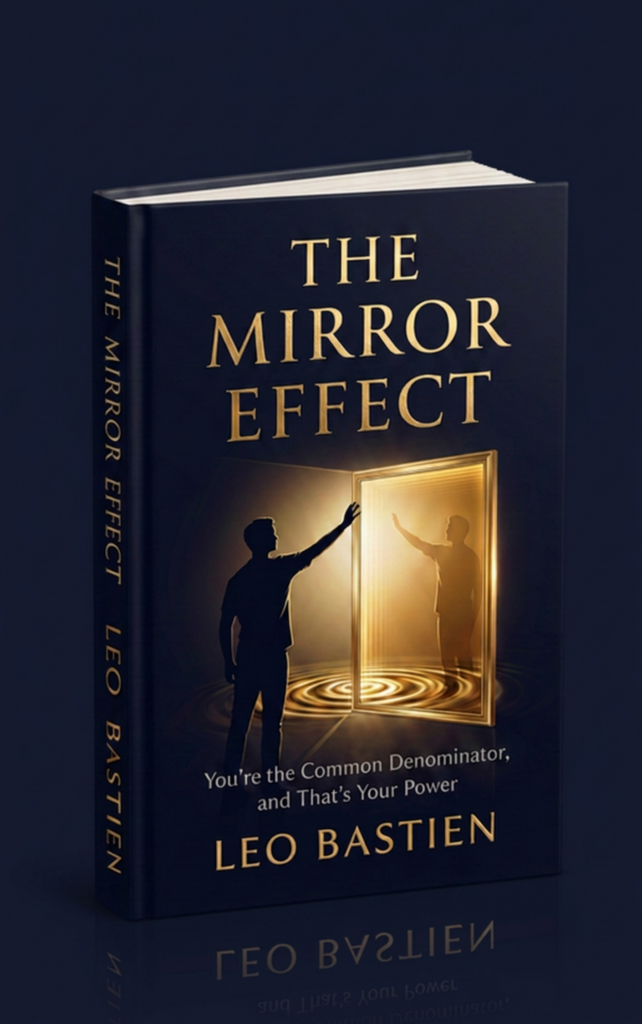
This connects to a central idea in my book, The Mirror Effect: You’re the Common Denominator.
Our relationships can sometimes reveal beliefs, fears, and emotional habits we haven’t fully examined.
But there’s an important distinction.
Taking responsibility for your reactions doesn’t mean taking responsibility for your partner’s harmful choices.
Both people must be accountable for their behavior.
What can you do?
The next time you disagree, ask yourself:
- Am I listening to understand, or preparing my defense?
- Am I responding to what my partner actually said, or to what I fear they meant?
- Is there something I need to acknowledge or apologize for?
- Is my partner also willing to take responsibility?
Healthy relationships aren’t built by people who never make mistakes.
They’re built by people who can recognize mistakes, repair harm, and demonstrate meaningful change.
3. Love Is Not Enough Without Trust and Emotional Safety
Imagine loving someone but constantly questioning whether they’re telling you the truth.
You want to believe them.
You want to relax.
But broken promises, dishonesty, or repeated disappointments have made trust difficult.
You may still feel love.
But love without trust can become exhausting.
Trust isn’t simply believing that your partner loves you.
It’s having reasonable confidence that their words and actions are consistent.
It’s knowing that disagreements won’t automatically turn into humiliation, threats, or emotional punishment.
It’s feeling safe enough to express your needs without fearing retaliation.
And when trust has been damaged, saying “I love you” isn’t enough to repair it.
What can you do?
Rebuilding trust requires consistent behavior over time.
That may include honesty, acknowledging harm, respecting boundaries, and following through on commitments.
Both partners need to understand what rebuilding trust would actually involve.
But remember:
Forgiveness doesn’t require you to ignore repeated harmful behavior.
And love is not a reason to remain in a relationship where you feel threatened, controlled, or unsafe.
Emotional safety is not a luxury.
It’s a foundation.

4. Love Cannot Sustain a Relationship on Autopilot
Remember when you first fell in love?
You probably made time for each other without thinking about it.
A simple message could brighten your entire day.
You listened to their stories.
You noticed the little things.
You made an effort because the relationship mattered.
Then life happened.
Work.
Children.
Bills.
Responsibilities.
Exhaustion.
And slowly, the relationship became another item on an already overwhelming schedule.
Not necessarily because the love disappeared.
But because intentional connection stopped receiving attention.
A relationship can lose its sense of closeness even when love remains.
The solution isn’t always an expensive vacation or a romantic dinner.
Sometimes it’s ten minutes of uninterrupted conversation.
A genuine compliment.
An apology.
A hug that lasts longer than two seconds.
Or asking, “How are you really doing?” and staying long enough to hear the answer.
What can you do?
Try a simple daily connection ritual.
Set aside ten minutes without phones, television, or distractions.
Each partner shares one thing they appreciated that day and one thing they need support with.
Don’t use the time to solve every disagreement.
Use it to listen.
Small moments of consistent connection can help couples rebuild closeness, especially when both partners participate.
This is one of the themes I explore in The Midnight Bridge, my guide to recognizing emotional distance and creating opportunities for reconnection.
5. Sometimes Love Is Not Enough to Make Two People Compatible
This may be the hardest truth of all.
You can love someone and still want different futures.
One person wants children.
The other doesn’t.
One values stability and long-term planning.
The other wants a life built around constant change.
One partner is committed to addressing recurring problems.
The other refuses to acknowledge them.
Love may make these differences painful.
But it doesn’t automatically resolve them.
Not every difference means a relationship should end.
Healthy couples disagree, compromise, and grow together.
However, some differences involve fundamental needs, values, or boundaries that cannot be reconciled without one person sacrificing something essential.
And sometimes, the most compassionate decision is acknowledging that love alone cannot make a relationship healthy.
What can you do?
Ask yourself:
- Are our differences manageable, or do they involve incompatible life goals?
- Are both of us willing to make reasonable changes?
- Do I feel respected, emotionally safe, and able to be myself?
- Are our problems improving through consistent effort?
- If nothing changed over the next year, would this relationship still be healthy for me?
These questions aren’t meant to push you toward leaving.
They’re meant to help you make decisions based on reality rather than fear, guilt, or hope alone.
Sometimes love needs better communication. Sometimes it needs stronger boundaries. And sometimes it needs the courage to accept that a relationship cannot provide what both people require.

When Love Isn’t Enough, What Comes Next?
If you’ve recognized your relationship in these five truths, you might be wondering what to do next.
Start by identifying the actual problem.
Is it emotional distance?
A recurring conflict?
Broken trust?
Unmet needs?
Or a fundamental incompatibility?
Then consider whether both partners are willing and able to work toward meaningful change.
You don’t have to solve everything overnight.
But you do need more than promises.
Look for consistent actions.
And remember that working on yourself is valuable whether you stay together or decide to move forward separately.
Two Books. Two Important Parts of Relationship Growth.
Sometimes the challenge is understanding the patterns we bring into relationships.
Other times, it’s learning how to reconnect with someone we’ve gradually grown distant from.
That’s why I wrote two complementary guides.
The Mirror Effect: You’re the Common Denominator
Explore how beliefs, emotional reactions, boundaries, and recurring patterns can shape your relationship experiences.
The goal isn’t self-blame.
It’s greater self-awareness and more intentional choices.
Explore The Mirror Effect: Click Here
The Midnight Bridge
Explore emotional disconnection, communication, and practical ways to begin rebuilding closeness with your partner.
Because loving someone and knowing how to reconnect with them aren’t always the same thing.
Explore The Midnight Bridge: Get Your Copy
If both challenges sound familiar, you can also explore the two-book bundle available through The Lover’s Mindset.
Visit
Frequently Asked Questions (FAQ)
Can you love someone and still be unhappy in a relationship?
Yes. Love is only one part of relationship satisfaction. Someone may love their partner while experiencing emotional distance, unresolved conflict, incompatible goals, or unmet needs.
How do you know when love isn’t enough?
Consider whether your relationship consistently provides mutual respect, emotional safety, trust, communication, and willingness to address problems. Love alone cannot compensate for ongoing harmful behavior or fundamental incompatibility.
Can a relationship survive without emotional intimacy?
Some relationships experience periods of reduced emotional intimacy, especially during stressful life events. Whether the relationship can recover depends on the partners’ needs, circumstances, and willingness to reconnect.
Should you stay in a relationship just because you love someone?
Love matters, but it shouldn’t be the only consideration. Your well-being, safety, values, boundaries, and the overall health of the relationship also matter.
Can couples rebuild their connection after growing apart?
Sometimes, yes. Open communication, consistent effort, rebuilding trust, and addressing unresolved problems can help. Couples counseling may also be useful when both partners are willing to participate.