
You love your partner.
You trust them—or at least, you’re trying to.
But then something small happens.
They don’t answer your message.
They sound distracted during a conversation.
Or they ask for a little time alone.
Suddenly, your stomach tightens.
Your mind races.
You start wondering whether they’re losing interest, preparing to leave, or hiding something from you.
And before you know it, you’re arguing about something that seemed insignificant just minutes earlier.
Later, when everything settles down, you ask yourself:
“Why did I react so strongly?”
Sometimes, the answer has less to do with what happened today and more to do with what you’ve experienced before.
Past heartbreak, rejection, betrayal, or difficult childhood experiences can influence how we interpret situations in our current relationships.
But here’s something important.
Healing your past through your relationship doesn’t mean your partner is responsible for fixing your emotional wounds. And it doesn’t mean every problem in your relationship is caused by your past.
Instead, a healthy relationship may provide opportunities to recognize old patterns, communicate your needs, develop trust, and experience more supportive ways of connecting.
Your partner can support your growth.
But meaningful healing also involves your own choices, boundaries, and sometimes professional help.
Let’s explore five ways to understand your past without allowing it to control your present relationship.

1. Recognize When Past Experiences Influence Present Reactions
Imagine this.
Sarah grew up in a household where disagreements often ended with someone leaving the room and refusing to speak for hours.
As a child, she never knew when things would return to normal.
Years later, Sarah is in a loving relationship.
One evening, her partner says:
“I’m exhausted. Can we talk about this tomorrow?”
He intends to rest before continuing a difficult conversation.
But Sarah feels a sudden wave of panic.
To her, the request sounds like rejection.
She starts asking questions.
“Are you upset with me?”
“Do you still love me?”
“Why won’t you talk to me?”
Her partner becomes frustrated.
And suddenly, a simple request for rest has become an argument.
Sarah’s response may be influenced by earlier experiences in which silence felt threatening.
But that doesn’t mean her reaction proves she has unresolved trauma, or that her partner has done nothing wrong.
Both the present circumstances and her history deserve consideration.
What can you do?
When you notice a strong emotional reaction, ask yourself:
- What actually happened?
- What emotion am I experiencing?
- What meaning did I attach to the situation?
- Does this feeling remind me of something I’ve experienced before?
- Is there a current problem that also needs attention?
You might discover that a present situation reminds you of an earlier experience.
Or you might realize that your partner has repeatedly ignored a reasonable request.
Sometimes both are true.
The goal isn’t to dismiss your feelings. It’s to understand them more clearly.
2. Identify the Beliefs About Love You Learned From Your Past
We bring expectations about love, trust, conflict, affection, and commitment.
Some of these expectations develop through family experiences.
Others come from previous romantic relationships, friendships, or significant life events.
For example, someone who repeatedly experienced criticism might develop the belief:
“If I make a mistake, people will stop loving me.”
Someone who experienced betrayal might begin to believe:
“Trusting someone means eventually getting hurt.”
And someone who learned to avoid conflict might believe:
“If I express my needs, I’ll create problems.”
These beliefs can influence how we interpret everyday interactions.
But they aren’t necessarily permanent.
Try this reflection exercise
Complete these sentences:
Growing up, I learned that love meant…
In previous relationships, I began to believe…
When someone disappoints me, I usually assume…
One belief about relationships I’d like to reconsider is…
Now examine your answers.
Are these beliefs supported by your present experiences?
Are they helping you build the relationship you want?
Or are they making it difficult to communicate, trust, or set boundaries?
For example, you might replace:
“If I disagree with my partner, they’ll leave me.”
With:
“I can express disagreement respectfully, and a healthy relationship should allow room for different opinions.”
This doesn’t mean repeating a positive statement will automatically heal a painful experience.
It means beginning to question assumptions that may no longer serve you.

3. Learn to Communicate Your Triggers Without Blaming Your Partner
Here’s a common relationship problem.
One person feels hurt.
The other person feels accused.
Both become defensive.
And neither feels understood.
Imagine your partner forgets to call when they said they would.
You immediately feel unimportant.
You might respond:
“You never care about me! I’m obviously not a priority.”
But perhaps what you really want to communicate is:
“When you didn’t call as planned, I felt disappointed. Reliability is important to me, and I’d like us to follow through on what we agree to.”
Notice the difference.
The second statement describes what happened, explains the emotional impact, and communicates a reasonable need.
It doesn’t require you to hide your feelings.
And it doesn’t assume that you know your partner’s intentions.
A simple communication formula
Try expressing yourself using these four parts:
1. What happened: “When our plans changed without warning…”
2. How I felt: “…I felt disappointed and anxious.”
3. Why it matters: “Keeping commitments helps me feel secure.”
4. What I need: “Could we let each other know earlier when plans change?”
Your partner may also have a perspective worth hearing.
Perhaps they experienced an unexpected problem.
Or perhaps this is part of a repeated pattern they need to address.
Either way, a conversation is more productive when both people can speak honestly and take responsibility for their behavior.
Your past may help explain why something hurts, but it doesn’t eliminate your right to expect respect in the present.
4. Build Emotional Safety Through Boundaries and Consistent Behavior
One of the most meaningful experiences in a healthy relationship is discovering that you can express yourself without being punished for it.
You can disagree.
You can ask for reassurance.
You can say no.
You can admit when you’re afraid.
And you can expect your partner to treat you with respect, even during difficult conversations.
But emotional safety isn’t created through unconditional tolerance of every behavior.
It develops through trust, boundaries, accountability, and consistent actions.
For example, suppose one partner becomes overwhelmed during arguments and needs time to calm down.
A healthy boundary might sound like:
“I want to finish this conversation, but I’m getting overwhelmed. I need twenty minutes, and then I’ll come back so we can talk.”
That is different from disappearing for days, refusing to communicate, or using silence as punishment.
Similarly, being compassionate toward a partner’s difficult past doesn’t mean accepting intimidation, repeated verbal attacks, or controlling behavior.
What can you do together?
Discuss what helps each of you feel emotionally safe.
You might ask:
“What makes difficult conversations easier for you?”
“How should we handle disagreements when one of us becomes overwhelmed?”
“What boundaries are important to each of us?”
“How can we repair things after we’ve hurt each other’s feelings?”
Then focus on following through.
An apology matters.
But consistent changes in behavior matter too.
If your relationship involves threats, coercion, violence, or ongoing emotional abuse, prioritizing safety and seeking appropriate support is more important than trying to heal through the relationship itself.
5. Accept That Healing Is a Process, Not a Relationship Assignment
There’s a romantic idea that the right person will heal everything you’ve experienced.
They’ll love you so deeply that your insecurities disappear.
They’ll be patient enough that your fears vanish.
And eventually, you’ll never feel hurt again.
It’s a beautiful story.
But real relationships are more complicated.
A supportive partner can offer encouragement, understanding, and opportunities for healthier experiences.
However, they cannot erase your past.
And they shouldn’t be expected to serve as your therapist.
Healing may involve reflection, learning emotional regulation skills, improving communication, developing supportive friendships, or working with a qualified mental health professional.
For some people, trauma-focused therapy may be especially helpful.
And healing doesn’t always happen in a straight line.
You might feel secure for months and then experience an unexpected wave of anxiety.
That doesn’t mean you’ve failed.
It means emotional growth can take time.
What can you do?
Focus on progress rather than perfection.
Ask yourself:
- Am I becoming more aware of my emotional reactions?
- Am I communicating my needs more clearly?
- Am I learning to recognize healthy and unhealthy behavior?
- Am I setting boundaries that protect my well-being?
- Am I choosing relationships where respect and accountability are mutual?
These are more useful measures of growth than expecting never to feel afraid, angry, or insecure again.
Your relationship can be part of your healing journey without becoming responsible for your entire healing journey.
How to Stop Bringing Past Relationship Pain Into a New Relationship
If you’ve experienced betrayal, rejection, or repeated disappointment, it may be difficult to trust again.
You might notice yourself searching for warning signs.
Questioning small changes in behavior.
Or expecting a new partner to repeat the mistakes of someone from your past.
The solution isn’t to ignore your instincts or force yourself to trust everyone.
It’s to learn how to evaluate your present relationship based on current evidence.
Try these steps:
- Recognize your concerns. Don’t criticize yourself for feeling afraid.
- Identify what triggered the feeling. Was it a specific behavior, an assumption, or a memory?
- Look for patterns of actual behavior. Has your partner consistently demonstrated honesty and reliability?
- Communicate your needs. Explain what helps you feel respected and secure.
- Allow trust to develop gradually. Trust is built through experience, not demanded through reassurance.
If your partner repeatedly breaks trust, your discomfort may be responding to a genuine problem rather than an old wound.
Healing also includes learning when to protect yourself.
Can a Healthy Relationship Help You Heal From Childhood Experiences?
A supportive relationship may offer experiences that differ from those you had earlier in life.
For example, someone who grew up fearing conflict may gradually discover that disagreements can be resolved respectfully.
Someone who felt consistently dismissed may experience what it’s like to have their feelings taken seriously.
These experiences can be meaningful.
But they don’t guarantee that childhood trauma will disappear, and they don’t replace professional treatment when that is needed.
You also don’t need to remain in a particular romantic relationship to heal.
Personal growth can happen through therapy, friendships, family relationships, community support, and individual reflection.
A healthy partnership can support healing. It should never require you to sacrifice your safety to achieve it.
Understanding the Patterns You Bring Into Love
One of the most useful questions we can ask ourselves is:
“What have my past experiences taught me to expect from love?”
Sometimes the answers are encouraging.
We may have learned kindness, patience, loyalty, and the importance of communication.
Other times, we discover expectations that deserve reconsideration.
Perhaps we confuse constant reassurance with trust.
Perhaps we avoid conflict because disagreement feels threatening.
Or perhaps we repeatedly overlook our own boundaries because we’re afraid of losing someone.
Understanding these patterns can help us make more intentional choices.
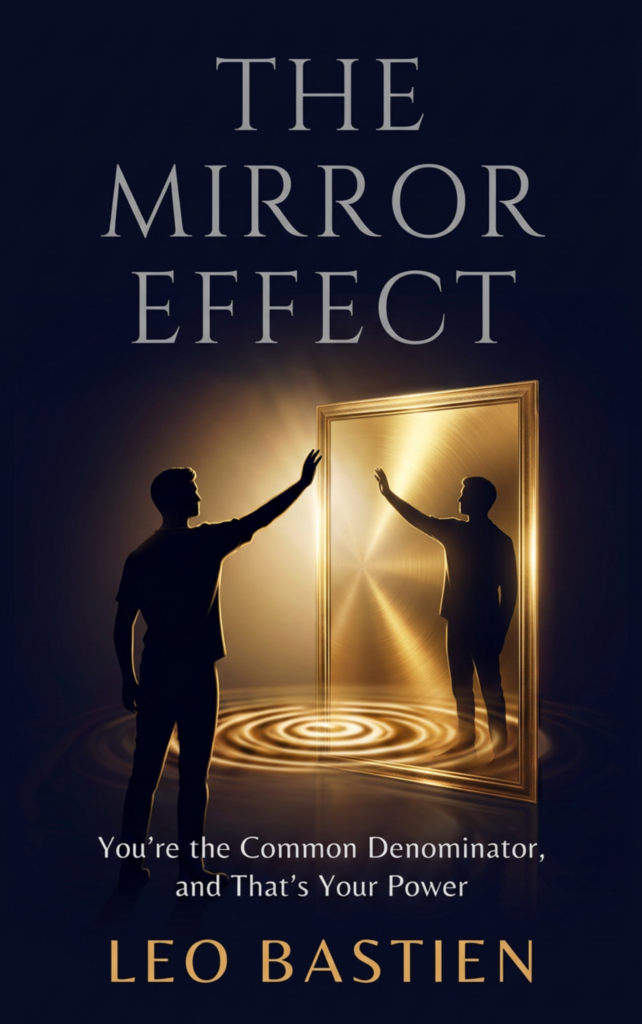
That’s one of the ideas I explore in my book, The Mirror Effect: You’re the Common Denominator.
The concept of the mirror is a metaphor for self-reflection.
It isn’t a claim that your partner’s behavior is caused by your thoughts or that you’re responsible for everything that happens in a relationship.
Instead, it encourages you to examine what you can influence while recognizing that other people remain responsible for their own choices.
For a deeper look at this idea, read our article on the mirror effect in relationships.
You can also explore projection in relationships to understand how our own emotions sometimes influence what we assume about a partner.
Ready to Understand Your Relationship Patterns?
If you find yourself repeating familiar emotional reactions, struggling with boundaries, or wondering why certain relationship experiences feel so difficult, self-reflection can be a valuable starting point.
I wrote The Mirror Effect: You’re the Common Denominator to help readers explore recurring patterns, personal responsibility, emotional habits, and the choices that shape their relationships.
The book isn’t about blaming yourself for someone else’s behavior.
It’s about becoming more aware of the patterns you can understand and change.
Explore The Mirror Effect:
Because understanding your past isn’t about living there forever.
It’s about giving yourself more freedom in the present.
Frequently Asked Questions (FAQ)
Can you heal your past through a relationship?
A healthy relationship can provide support, emotional safety, and opportunities to develop healthier communication patterns. However, a partner cannot independently heal another person’s trauma, and some experiences may require professional support.
Why does my current relationship trigger memories of my past?
Present experiences can sometimes remind us of earlier rejection, conflict, betrayal, or insecurity. However, not every emotional reaction is caused by past trauma. It’s important to consider both your history and what is happening in your current relationship.
How do I stop projecting past trauma onto my partner?
Start by recognizing your emotional reactions, separating current facts from assumptions, and communicating your needs clearly. If past trauma continues to affect your well-being or relationships, a qualified mental health professional can help.
Can your partner help you heal childhood trauma?
A supportive partner can contribute to a sense of safety and understanding. But they are not a substitute for professional treatment, and they shouldn’t be expected to tolerate harmful behavior as part of someone else’s healing.
How do you know if your past is affecting your relationship?
You may notice recurring fears, assumptions, or reactions that seem connected to earlier experiences. Journaling, thoughtful conversations, and professional support can help you explore these patterns without assuming that every relationship difficulty originates in the past.
Do you have to forgive someone from your past to heal?
No. Healing doesn’t necessarily require forgiveness, reconciliation, or renewed contact with someone who hurt you. People can develop healthier boundaries and move forward without excusing past harm.
Final Thoughts
Your past has influenced who you are.
The people who loved you.
The people who disappointed you.
The experiences that taught you to trust.
And the moments that made trusting difficult.
But your past doesn’t have to determine every choice you make in the future.
You can learn to recognize old fears without letting them control every conversation.
You can communicate your needs without apologizing for having them.
You can develop compassion without abandoning your boundaries.
And you can build relationships where both people take responsibility for creating something healthy.
Healing your past through your relationship isn’t about finding someone who can erase your history. It’s about learning how to move forward with greater awareness, healthier boundaries, and the freedom to love without losing yourself.